
Crawl space sump and drainage systems in Richmond run $1,500–$4,000 for a sump alone and $2,500–$7,000 with perimeter collection. Over clay that sheds storms toward foundations, low crawls need engineered exits — especially in the flatter eastern metro.
How the system works, what battery backup is really for, and how drainage fits the bigger moisture picture.
The clay-soil problem, solved with plumbing
Richmond-area clay makes storms linger: water sheets across it toward the house, then whatever soaks in drains away slowly, holding saturation at the footing line for days. A crawl that's the low point collects it. The engineered answer is collection and ejection — perimeter drainage intercepting water at the entry line, sloped to a sealed sump basin, pumped out and discharged far enough away that it doesn't circle back.
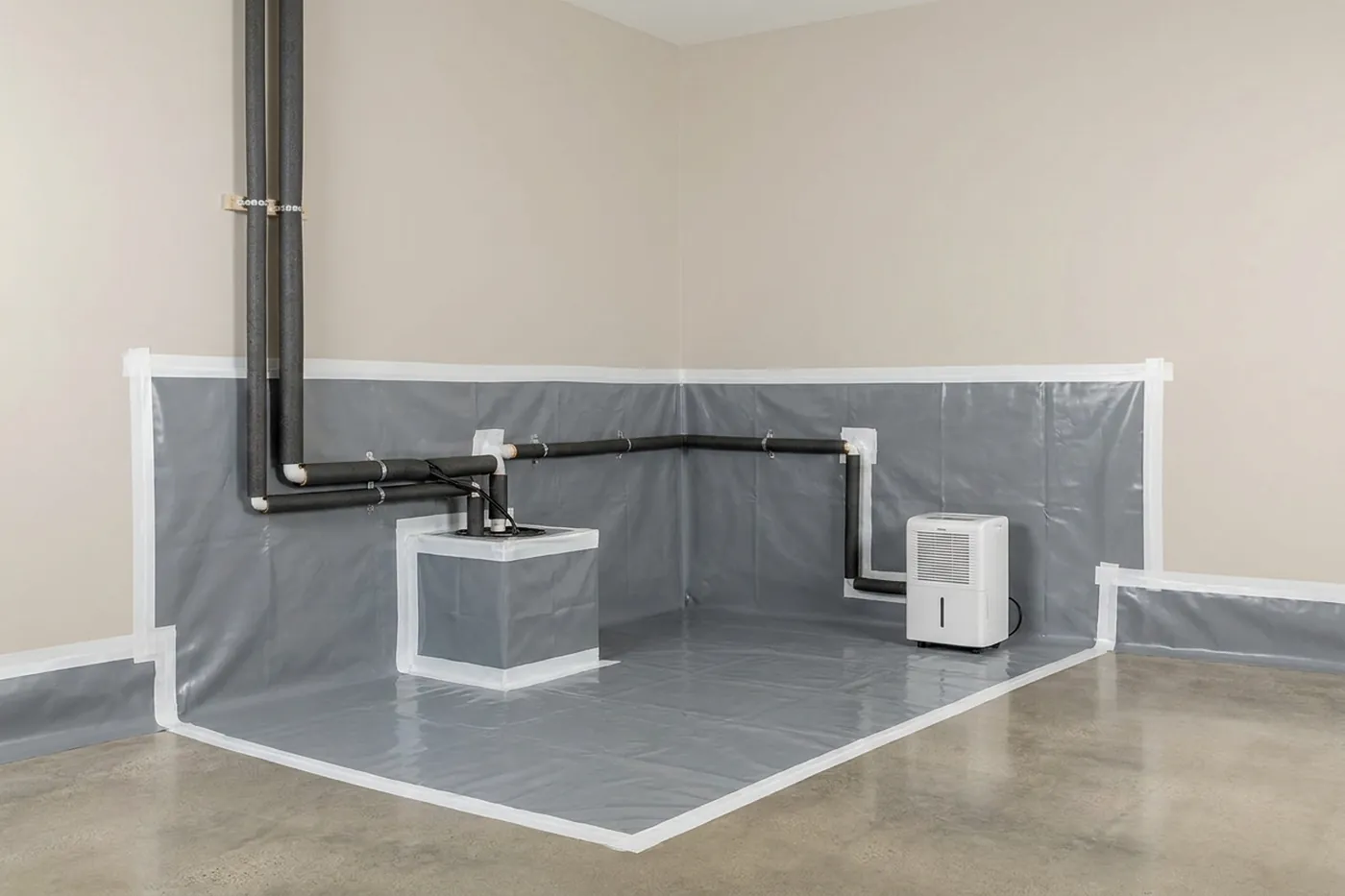
Anatomy of a system that works during the storm that matters
- Sealed basin — no open pit evaporating collected water back into the crawl
- Properly sized pump with a check valve so ejected water can't fall back
- Battery backup option — the biggest storms and power failures travel together
- Discharge that stays gone — routed to daylight or a legal exit, never at the foundation
- High-water alarm options for crawls under finished space
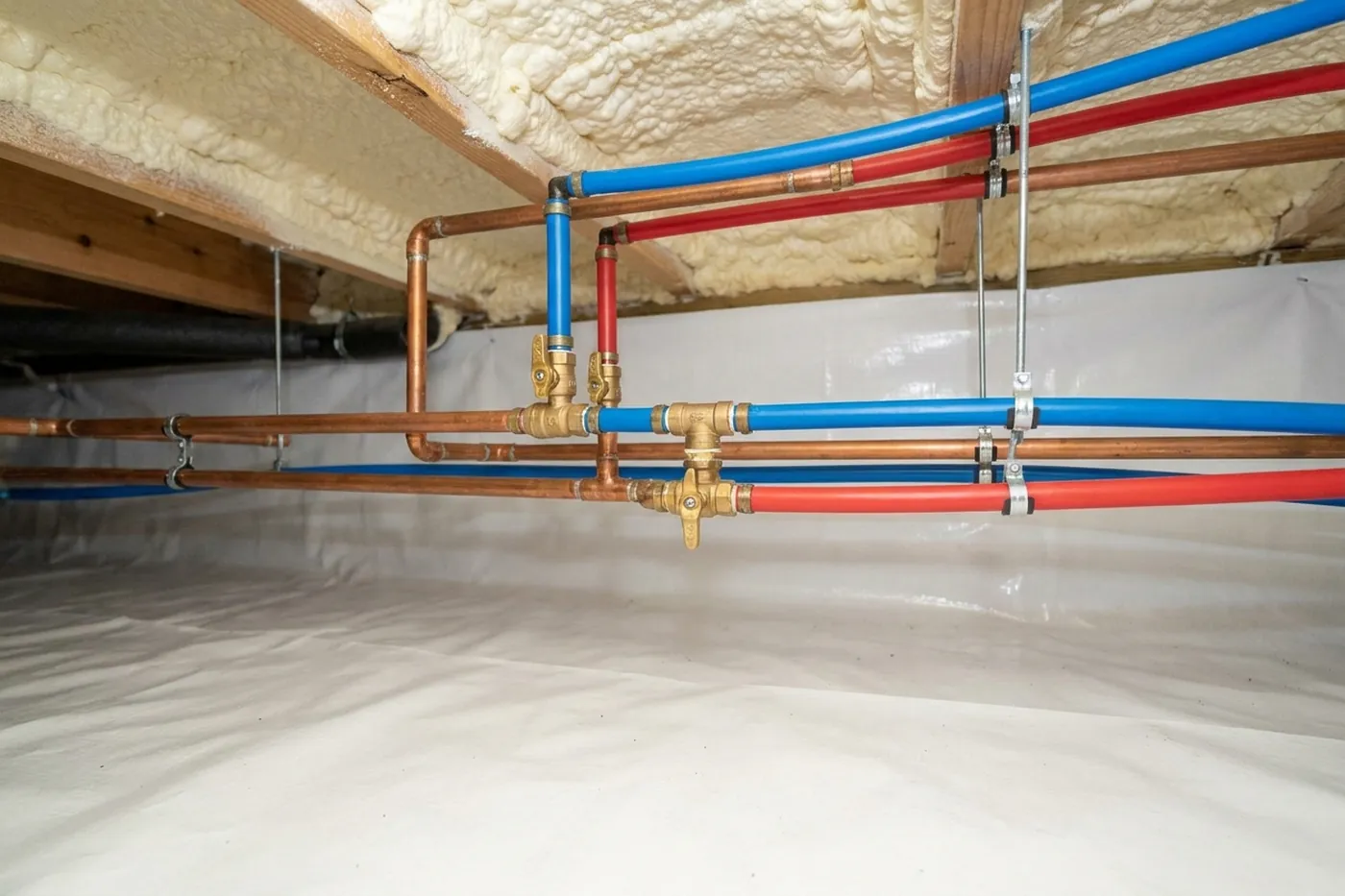
Drainage now, sealing later — or both at once
Drainage is stage one of every wet-crawl fix. Some homeowners stop there and reassess after a storm season; many pair it with encapsulation in one sequence and save the second mobilization. Either path starts with the same free inspection and a written scope with photos — and if downspout extensions and grading would solve half your problem for a few hundred dollars, that goes in the quote first.
Sump design for clay, sand, and the storm stack-up
A Richmond sump earns its keep during the stacked storms — the July week when the second thunderstorm arrives before the ground finished draining the first. Sizing follows the lot: clay-side crawls (slow drainage, long saturation) want capacity and a check-valve discharge routed well past the backfill; sandy coastal-plain lots drain themselves between storms but flood fast during them, favoring switches that trigger early and pumps that move volume. Every basin here is sealed — an open sump pit in a sealed crawl is a humidity chimney — and every discharge is walked to its end point, because a pump that returns water to its own intake zone is theater.
Battery or water-powered backup is the honest upsell in a region where summer storms and power drops travel together; we price it as a line item, not a bundle, and the evaluation says plainly whether your lot's history justifies it.
Can a pump fix this, or is it the wrong tool?
A pump is often the first thing suggested and rarely the first thing needed. On Piedmont clay the water usually had an easier route to interrupt.
| Option | What it does | The local catch |
|---|---|---|
| Interior perimeter drain and pump | Collects and ejects water that has arrived | Reasonable where clay has already delivered standing water under an older house |
| Exterior drainage and grading | Stops water arriving in the first place | Higher value on slow-draining ground than any pump |
| Gutters and extensions | Removes the largest single source, cheaply | The cheapest correction available, and frequently sufficient |
| Pump alone, nothing else | Manages symptoms indefinitely | Leaves saturated clay pressed against a foundation built before modern damp-proofing |
In pre-war stock especially, running a pump forever against a grading fault is an expensive way to avoid a day with a shovel.
Frequently asked questions
What does a crawl space sump system cost?
Installed sump systems in metro Richmond typically run $1,500-$4,000 alone, or $2,500-$7,000 with perimeter drainage. Battery backup adds a few hundred dollars and earns it in the first storm outage.
How do I know if I need a sump?
If water pools in the crawl during storms or the soil stays saturated at the footing line, gravity has no exit — that's the sump's job. The inspection maps where water enters and sits, then we size from that.
What maintenance does a sump need?
A float test a couple times a year and an eye on the discharge line. We set ours up sealed, with check valves, and can put you on a check schedule if you'd rather never think about it.
Where does the water go?
Discharge routes well away from the foundation — daylight where grade allows it, otherwise to an appropriate exit point. Recycling the water back against your own wall is the classic DIY mistake we fix most.
Get a free Richmond crawl space inspection
Tell us what you're noticing — smells, humidity, floor bounce, a wet crawl — and we'll schedule an inspection with photos of what we find. We reply the same business day.